How to Specify a Custom Cable for an RFQ
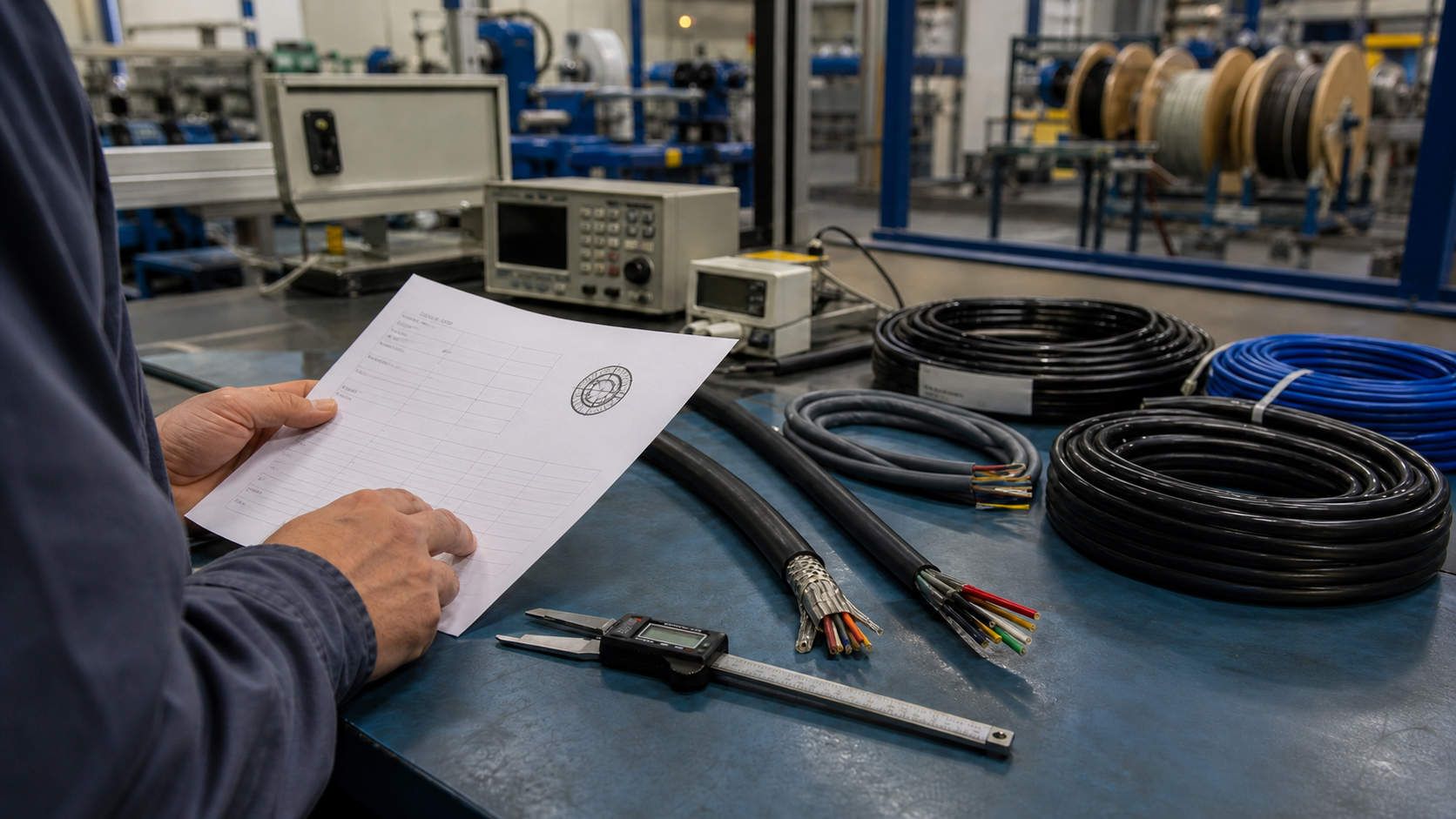
A custom cable RFQ works best when it gives the manufacturer enough technical information to evaluate the application, the construction, and the production requirements. If the details are too broad, the quote may be slow, inaccurate, or based on assumptions that have to be corrected later. General Wire Products already frames its quote process around application requirements, technical specifications, performance criteria, and regulatory considerations, so this topic fits both search intent and the company’s real workflow.
Start with the application
The first thing to define is where and how the cable will be used. That means the operating environment, how the cable will be routed, whether it will be stationary or flexing, and what kind of equipment it connects. A cable for process control, factory automation, plenum spaces, or harsh industrial conditions should not be specified with generic language. The application drives the material and construction decisions. General Wire Products positions its custom manufacturing around application specific design rather than commodity selection, which is exactly why this information matters at the RFQ stage
Define the electrical and construction requirements
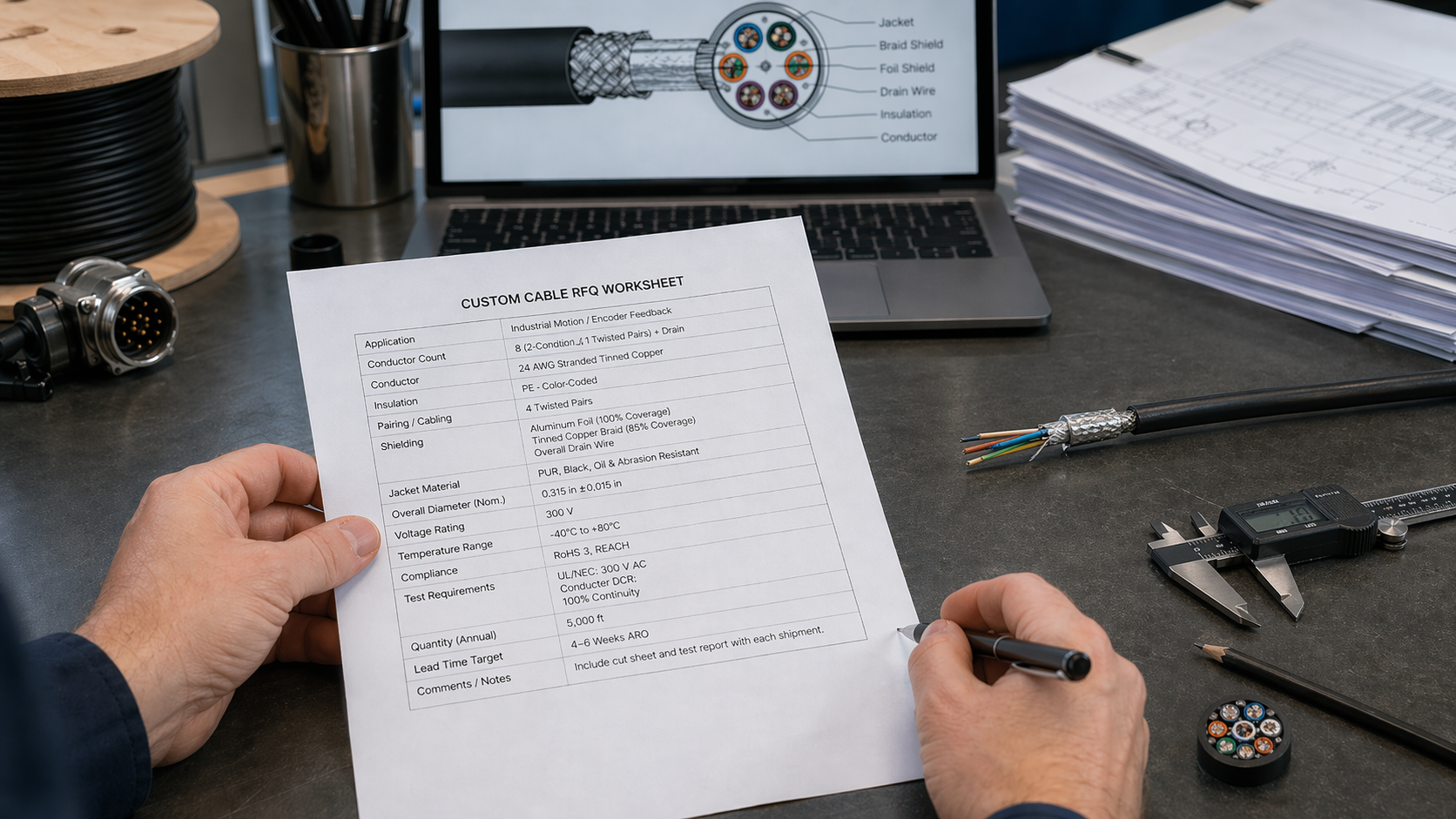
A strong RFQ should identify conductor size, conductor count, shielding needs, voltage considerations, impedance if relevant, temperature range, and any known dimensional limits. It should also note whether the design needs specific insulation or jacket characteristics such as abrasion resistance, chemical resistance, low smoke behavior, or plenum performance. If a legacy part number exists, include it, but do not rely on part number matching alone. The manufacturer still needs the real performance and construction requirements. General Wire Products supports this kind of engineering review with technical data resources covering insulation systems, jacket material properties, conductor capacity, and multi conductor styles.
Include compliance and test expectations
If the cable must meet code, safety, customer, or internal validation requirements, state that clearly in the RFQ. This includes plenum rating requirements where applicable, as well as any electrical, physical, or environmental verification that must be completed before approval. General Wire Products presents quality and testing as a core part of its manufacturing process and states that it operates under ISO 9001:2015 certification with controlled testing and process oversight. That makes test expectations a practical part of the quote conversation, not an afterthought.
Do not leave out commercial details
Engineering data matters most, but purchasing details matter too. Include estimated annual usage, prototype versus production quantity, target lead time, packaging needs, and any documentation expectations. Those details affect manufacturability, scheduling, and pricing.
What makes an RFQ better
A good custom cable RFQ does not need to be overly complicated. It needs to be complete enough for an engineering driven manufacturer to review the design against the actual use case. That usually leads to a faster quote, fewer revisions, and a cable that is better matched to the job. For companies evaluating a custom build, the next logical step is to organize the technical requirements clearly and send them through a detailed quote process.